Contrast therapy alternates a hot sauna session, typically 15 to 20 minutes at 170 to 190°F, with a short cold plunge at 50 to 59°F for 1 to 3 minutes, repeated for two or three rounds. A home setup for this usually means a standalone electric heater sized to the cabin’s cubic footage paired with a separate chilled tub or barrel that has its own pump and filtration. Beginners get the best results by starting with one round and a shorter cold exposure, then building up over several weeks rather than trying the full protocol on day one.
What Actually Happens When You Combine Heat and Cold?
Heat widens blood vessels near the skin and raises heart rate, similar to light cardio. Cold does the opposite: vessels constrict, heart rate drops, and the body works to conserve core temperature. Moving between the two forces the cardiovascular system to shift gears repeatedly, which is the mechanism behind most of the claimed benefits, from perceived recovery to mood. None of this requires expensive equipment. A basic electric heater and a tub of cold water accomplish the swing; the rest is about doing it consistently and safely.
How Do You Size a Sauna Heater for This Kind of Use?
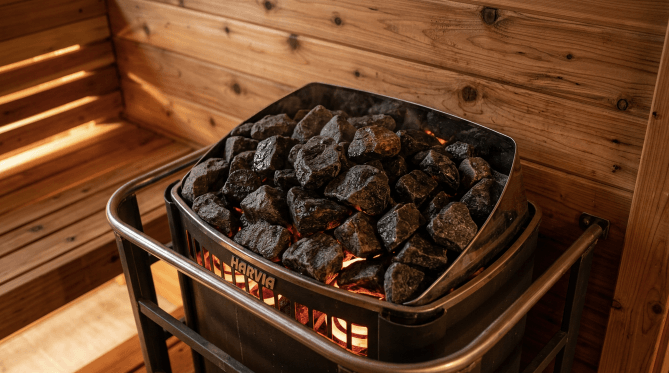
Heater sizing is based on the cabin’s interior volume in cubic feet, not square footage, because you’re heating a box of air, not a floor. A typical two-person cabin around 150 to 200 cubic feet runs on a 4.5kW to 6kW electric heater. A four-person cabin closer to 300 cubic feet usually needs 7kW to 9kW to reach 190°F within a reasonable warm-up window of 30 to 45 minutes. Undersizing the heater is the most common beginner mistake; a unit that’s too small will run constantly and still struggle to hold temperature once the door opens and closes a few times during a contrast session. Stones matter too. A heater loaded with 40 to 50 pounds of sauna rocks holds heat between door openings far better than a bare heating element, which is useful when you’re stepping in and out for cold rounds.
What Should You Look for in a Cold Plunge Setup?
The plunge side needs three things: enough water volume to stay cold under repeated use, a way to keep that water clean, and a way to keep it cold without buying ice daily. Most home tubs and barrel plunges hold somewhere between 90 and 250 gallons. A dedicated chiller unit, rated in tons or BTUs to match that volume, will hold a steady 50 to 55°F even after several people use it back to back. Filtration is usually a cartridge or sand filter running on a small pump, sometimes paired with an ozone generator to control bacteria without heavy chlorine use. Skipping filtration is fine for occasional single-person use if you drain and refill often, but daily contrast sessions for a household need real circulation.
See also: Five mistakes I see first-time JDM engine buyers make
What Does the Research Say About Heat and Cold Together?
Regular sauna use on its own has a reasonably solid evidence base. A large Finnish cohort study found that more frequent sauna bathing was associated with lower fatal cardiovascular and all-cause mortality risk over long-term follow-up (Laukkanen et al., JAMA Internal Medicine, 2015). A related analysis found that the combination of sauna bathing and cardiorespiratory fitness was jointly associated with lower cardiovascular and all-cause mortality risk, suggesting the two habits may work together rather than substitute for each other (Zaccardi et al., Annals of Medicine, 2018). Shorter-term work has also measured favorable changes in blood-based cardiovascular markers after a single sauna session in regular users, though these are association and mechanism findings, not proof that any specific protocol prevents disease (Kunutsor et al., Heart and Vessels, 2018). The cold side of contrast therapy is less settled. Some trials suggest cold-water immersion performed shortly after resistance training can blunt strength and hypertrophy adaptations over time, so if you lift seriously, it’s worth separating hard training days from contrast sessions rather than stacking them.
How Do You Structure a Beginner Contrast Session?
A workable starting protocol: 12 to 15 minutes in the sauna at a moderate 160 to 170°F, then 1 minute in the plunge at 55 to 59°F, then back into the sauna for another 10 minutes, then a final 1 to 2 minute cold dip. That’s a full session in under 30 minutes. Add a third round only once the first two feel routine. Sit down or use a bench in the plunge rather than standing in deep water, since cold exposure can affect balance and judgment faster than people expect. Never do a cold plunge alone if you’re new to it, and skip the cold side entirely if you have a heart condition, are pregnant, or have been drinking alcohol.
What Does It Cost to Run Both?
A 6kW electric heater running for 45 minutes a session, four sessions a week, costs somewhere in the range of $8 to $15 a month depending on local electricity rates. A small chiller sized for a 150-gallon tub typically adds $10 to $25 a month running intermittently to hold temperature, more in warm climates where it works harder against ambient heat. Together, most households land under $40 a month in energy costs once both units are sized correctly, which is modest compared to the upfront cost of the equipment itself. Most electric heaters sized for a two- to four-person cabin fall in the 6kW to 9kW range, and retailers like https://sweatdecks.com stock several options in that window if you want to compare current pricing before settling on a wiring plan.
Frequently Asked Questions
How long should a beginner stay in the sauna before the cold plunge? Start with 10 to 12 minutes at a moderate 160 to 170°F rather than pushing straight to 190°F. Once you can sit comfortably for that long without lightheadedness, extend toward 15 to 20 minutes.
How cold does the plunge need to be to count as contrast therapy? Most home protocols use 50 to 59°F. Water much warmer than that feels like a cool shower rather than a true cold stimulus, and water below 45°F is unnecessary for beginners and raises the risk of cold shock.
Can you do contrast therapy with a home sauna and a stock tank instead of a chiller? Yes, a stock tank with bagged ice works for occasional use, but a chiller keeps the temperature consistent and avoids the daily cost and hassle of buying ice. Filtration still matters either way if the water sits for more than a day.
How many rounds of hot and cold should a beginner do? Two rounds is plenty to start: sauna, cold plunge, sauna again, then a final short cold dip. Three rounds is a reasonable ceiling once you are used to the routine.
Is it better to end on hot or cold? Most people end on cold because it leaves you alert rather than drowsy, which matters if you are doing this in the morning or before driving. Ending on heat can help with sleep if you do your session in the evening.
References
- Laukkanen, T., et al. “Association Between Sauna Bathing and Fatal Cardiovascular and All-Cause Mortality Events.” JAMA Internal Medicine, 2015. https://pubmed.ncbi.nlm.nih.gov/25705824/
- Zaccardi, F., et al. “Joint Associations of Sauna Bathing and Cardiorespiratory Fitness on Cardiovascular and All-Cause Mortality Risk.” Annals of Medicine, 2018. https://pubmed.ncbi.nlm.nih.gov/28972808/
- Kunutsor, S. K., et al. “Short-Term Effects of Finnish Sauna Bathing on Blood-Based Markers of Cardiovascular Function in Non-Naive Sauna Users.” Heart and Vessels, 2018. https://pubmed.ncbi.nlm.nih.gov/29971466/
- “Effects of Cold-Water Immersion on Health and Wellbeing: A Systematic Review and Meta-Analysis.” PLoS One, 2025. https://pubmed.ncbi.nlm.nih.gov/39879231/
By Nathan Pierce